banner

banner
Showing posts with label bonsai disease. Show all posts

Spider mites - control strategies

Control Strategies - Early detection of spider mites, before damage is noticed, is important. Timely inspection of susceptible landscape plants — especially during periods favoring mite outbreaks — is the key to preventing serious damage. The tiny spider mites can be detected by taking a piece of white paper or cardboard and striking some plant foliage on it. The mites can be seen walking slowly on the paper. If 10 or more mites per sample are common, controls may be needed. When scouting for spider mites, pay particular attention to plants having a history of mite problems. Spider mites often re-infest the same plants year after year.

Cultural Control – Quarantine and Inspection is important to prevent/control infestations. The twospotted spider mite, for example, is often introduced on infested bedding and house plants. When purchasing new plants, whether for outside plants or inside house plants, carefully inspect the new material for any signs of mite activity.

Examine most thoroughly the lower leaf surfaces and where leaves branch from the stem. New house plants should be quarantined from other plants until you are sure that no mites are present.

A forceful jet of water from a hose can wash mites from plants. Periodical washing can keep spider mites under control on most ornamental plants in the landscape. This technique also helps conserve natural predators. House plants can be relocated outside for treatment of twospotted spider mites and returned as soon as dried.

Biological Control – Predators.
ladybug, spider mites predator
There are numerous insects (lacewings and lady beetles) that prey on spider mites. However, the most common predators are other types of predatory mites. Predatory mites can be purchased and released onto infested plants. Some species are host specific and each predator works better under different weather conditions. If predators are used, help insure a favorable environment for them to prosper, including avoiding application of pesticides that will kill them.
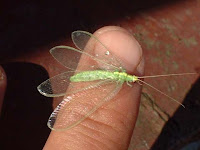
lacewing, spider mites predator


Chemical Control - Most spider mites, if detected early, can be controlled with insecticidal oils and soaps. Horticultural oils can be used on perennial and woody ornamentals during the summer at the 1 to 2 percent rate. Higher rates of horticultural oil (3 to 4 percent) or dormant oil are useful for killing mite eggs and dormant adults in the fall and spring. Spring applications of dormant oils seem to be the most effective on cool season mites. Insecticidal soaps are most useful in warmer weather. Soaps and oils work by contact only and have no residual activity so thorough coverage of the plant is necessary for good control.
Read more »

Spruce Spider Mite

spruce spider mite, spider mites pest
Spruce Spider Mite (Oligonychus ununguis) - The spruce spider mite is a common 'cool season' mite. This pest can be found on all types of conifers from spruces and pines to junipers and arborvitae.

This mite spends the winter in the egg stage attached to host plants. The eggs hatch in March to April and the mites can complete development in 3 to 4 weeks. If summer temperatures are constantly over 90 F, this mite becomes dormant and lays resting eggs. These eggs hatch and the adults resume activity in the fall when cooler
temperatures return.
spruce spider mite pest

Conifers often react slowly to the feeding of this mite. Yellowing and bronzing of the needles may not become apparent until the heat of the summer, even though the damaging feeding may have occurred the previous fall and spring.
Read more »

Twospotted Spider Mite

spider mites, red spider mites
Twospotted Spider Mite (Tetranychus urticae) - This is the most common and destructive mite on deciduous ornamentals. It has an extremely wide host range and will feed on many varieties of trees and shrubs, and it may attack greenhouse and field crops. It might feed on flowers, weeds, or fruits,. It is the most common mite pest infesting house plants. Immatures and adults are yellowish to greenish with two dark spots on either side of the body. Eggs are spherical and translucent. Delicate strands of webbing are spun by the mites on the undersides of infested leaves and between branches.

red spider mite, two spotted spider mites, pest spider mites
Twospotted spider mites overwinter as adult females in the soil or under the bark of host plants. They become active during the spring and may feed and reproduce throughout the summer and into fall, provided conditions remain favorable for plant growth. It is considered a “warm season” mite thriving under hot, dry summer conditions. Damaging populations seldom occur during wet, cool weather. The mites are especially destructive to winged euonym ous (burning bush) in landscapes.
Read more »

Spider mites - know your enemy

spider mites, pest red spider mites, red spot spider mites
Spider mites are common pests in the urban landscape. They can inflict serious damage to trees, shrubs and flowers. Both evergreen and deciduous plants may be attacked. Spider mites are not insects but are more closely related to ticks and spiders.

They have four pairs of legs, no antennae and a single, oval body region. Their common name is derived from their ability to produce silk, which most species spin on host plants. Mites are tiny—about the size of the period at the end of this sentence. They can also be very prolific, which is why infestations often go unnoticed until plants exhibit significant damage.

Many species of spider mites can be found in landscapes. The twospotted spider mite, Tetranychus urticae (Koch), and spruce spider mite, Oligonychus ununguis (Jacobi), are the most common pests. Other species with fewer host plants include: European red mite, Panonychus ulmi (Koch), found on apple trees; honeylocust spider mite, Platytetranychus multidigitali (Ewing); southern red mite, Oligonychus ilicis (McGregor), on a variety of plants; boxwood spider mite, Eurytetranychus buxi (Garman); and the
oak mite, Oligonychus bicolor (Banks).

Types of Damage
Spider mites have needle-like mouthparts and feed by piercing the leaves of host plants to suck out the fluids from individual plant cells. This causes the leaves to appear stippled or flecked, with pale dots where the cellular contents have been removed.

Prolonged, heavy infestations cause yellowing or bronzing of the foliage and premature leaf drop similar to drought stress. Severely-infested plants may be stunted or even killed. Most of the mites feed from the undersides of leaves, although the damage is most evident from the upper surface.

Heavily infested plants may be discolored, stunted or even killed. Web producing spider mites may coat the foliage with fine silk which collects dust and looks dirty. They are even known to wander inside when numbers are abundant and walk about on counters and offices furniture. They frequently enter computer equipment and
appliances, apparently for the warmth. Some of these invasions may originate on populations from nearby house plants.

Life Cycles and Habits
Spider mite species seem to be active in either warm or cool weather. The twospotted, European red, honeylocust, and oak spider mites do best in dry, hot summer weather. The spruce and southern red spider mites do best in cool spring and fall weather.

All spider mites go through the same stages of development, which is similar but not exactly the same as in insects. Adult females usually lay eggs on their host plants.

The eggs hatch in days to weeks into the first stage, called a larva. Larvae are round bodied and have only three pairs of legs. The larvae feed for a few days, seek a sheltered spot to rest and then molt into the first nymphal stage. The first nymphal stage has four pairs of legs. The first nymphs feed a few days, rest and then molt into the second nymphal stage. These nymphs feed, rest and molt into the adult stage. Adult males are usually the size of the second ny mph and have pointed abdomens. The females have rounded abdomens and are the largest mites.

Most spider mites spend the winter in the egg stage but the twospotted spider mite overwinters in protected places as resting adult females.
Read more »

Spider mites - they do hurt your bonsai

Spider mites - they do hurt your bonsai - Like any othe plant or tree, Bonsai will be susceptible to pests. If caught early and taken care properly, you can save your treasured tree.
Read more »

Pests & Diseases

Pests & Diseases - As living trees, bonsai are susceptible to insect attacks and disease. Preventive and
corrective measures include:

• Keeping your bonsai in good health, since insects and bacteria tend to attack weak trees
• Giving your tree ample light, fresh air and ventilation
• Keeping the soil free of spent blooms and fallen leaves etc.

You may also use an insecticidal soap spray which is not harmful to humans or animals. This soap derivative, however, may require more than one application to control the insect population. It's also a good idea to use this spray weekly to prevent any attacks.
Read more »

Fungi Attack your bonsai

Fungi Attack your bonsai - Fungal infection are something else you need to watch for when growing bonsai. Try to use a fungicide that is organic first, turning only to chemical as a last resort. Additionally, you want to read any labels carefully.

Read more »

Popular Posts


Blog Archive

Powered by Blogger.

Copyright © ornamental plant All Rights Reserved • Design by Dzignine
best suvaudi suvinfiniti suv